Rope Elongation
How much a rope stretches as load increases, and how that affects aircraft movement.
RampWarden Lab
RampWarden Lab is focused on practical testing and research for aircraft tie-down ropes, knots, elongation, preload tension, wet/dry rope behavior, and ramp restraint systems.
Purpose
Aircraft tie-down guidance is often based on habit, rule-of-thumb practices, or generic rope strength numbers. RampWarden Lab exists to create more practical, data-informed explanations for how tie-down systems behave on the ramp.
The goal is not to certify aircraft restraint systems or replace manufacturer guidance. The goal is to help pilots better understand rope length, preload tension, elongation, knot effects, wet rope behavior, tie-down geometry, and safety margins.
Research Areas
The Lab is being built around practical questions pilots face when tying down aircraft outdoors.
How much a rope stretches as load increases, and how that affects aircraft movement.
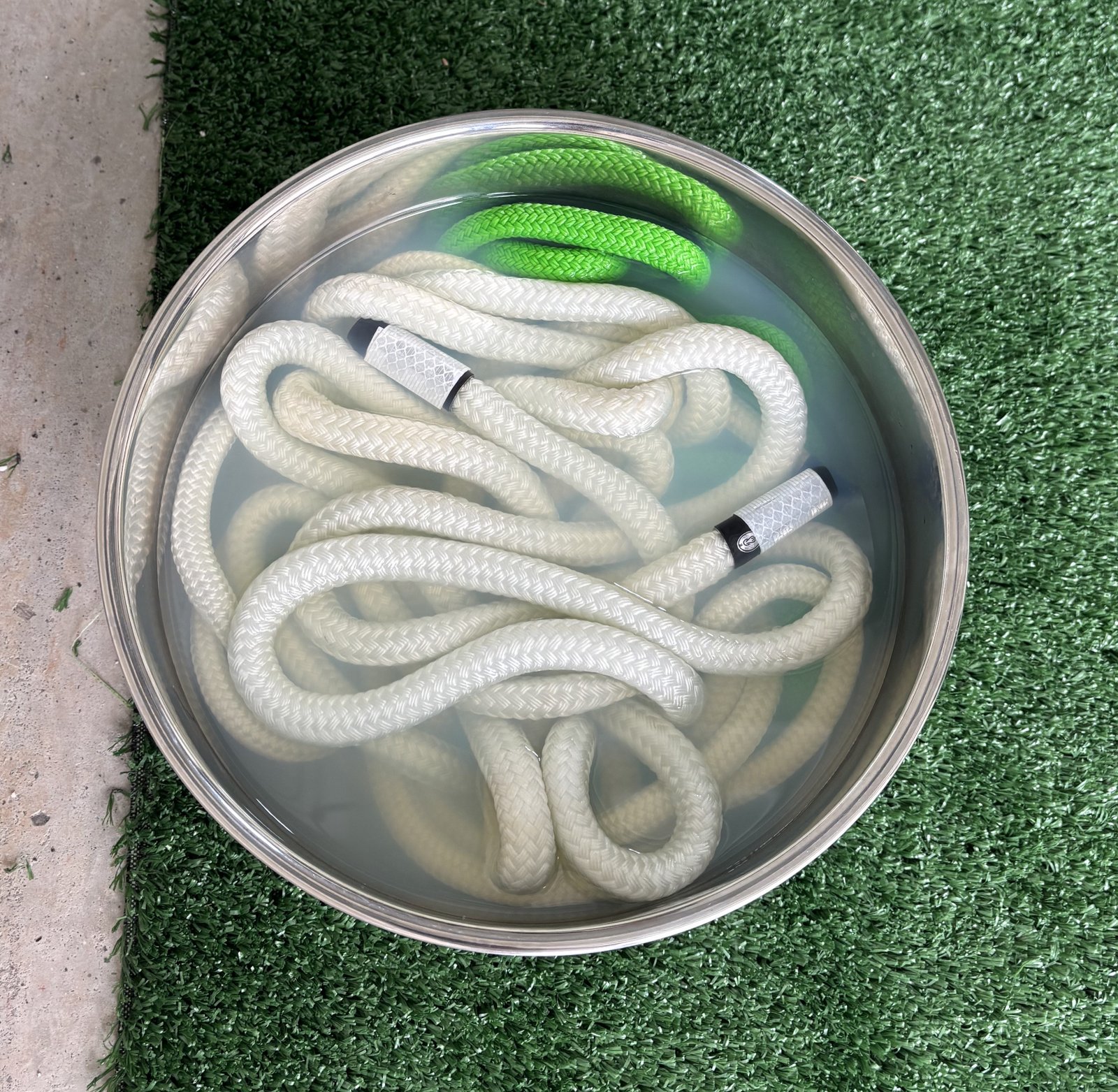
How rope performance changes after rain exposure, soaking, and wet/dry cycling.
How knots tighten, settle, and contribute to total ring-to-ring movement under load.
How practical preload can reduce slack without overtightening the aircraft.
How different rope constructions and restraint materials may behave under similar loads.
How anchor layout, rope angle, and working length affect tie-down demand.
Testing Programs
This section can expand over time as more articles, videos, charts, and test summaries are published.
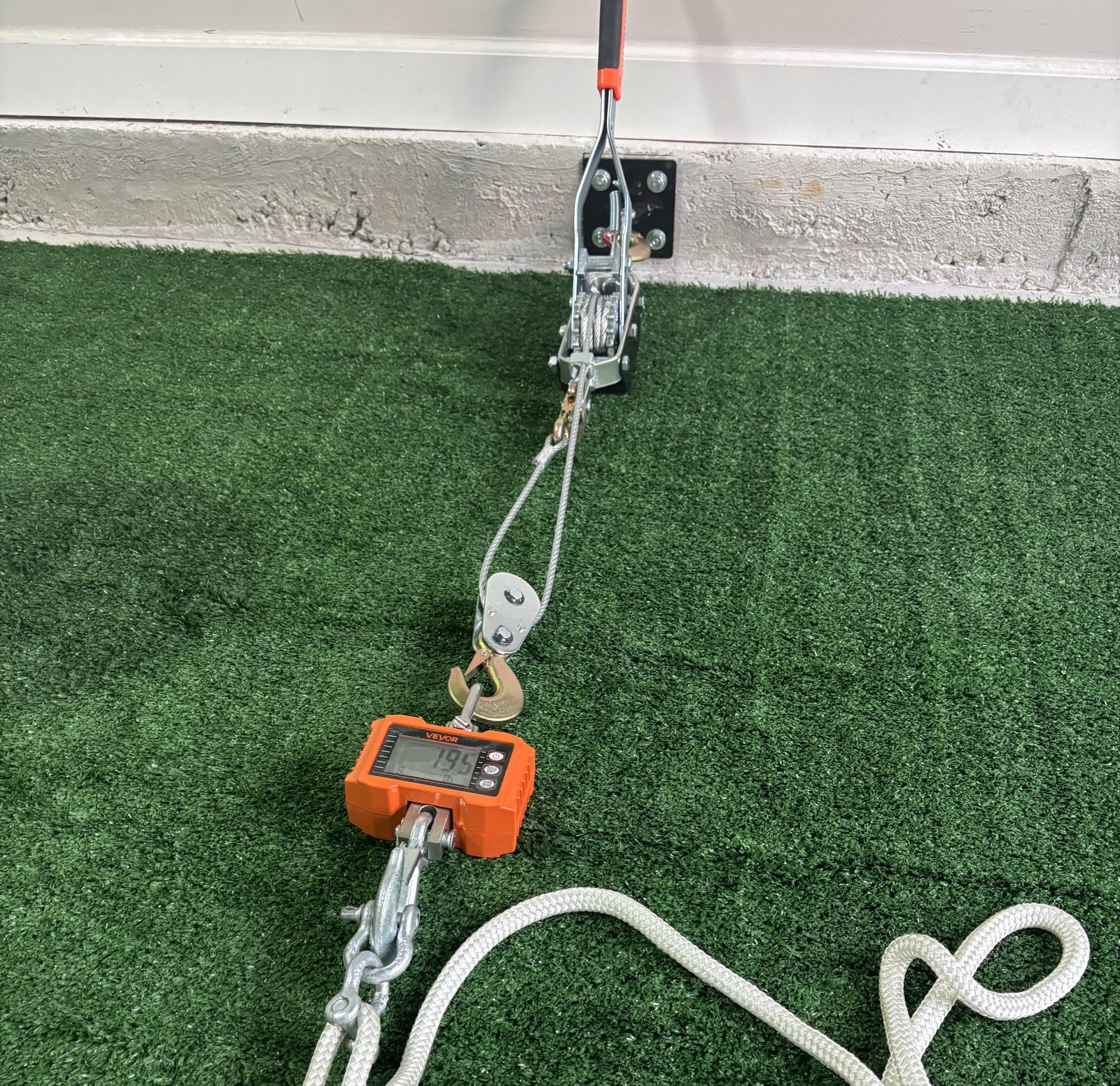
Static load testing using four cycles of uplift force to 500 lbf, plus Wet10 preload-retention checks, to help pilots understand how common 1/2" rope families behave as installed tie-down assemblies. The purpose is pilot education, not certification or a RampWarden rope product. Phase 1 compares double braided nylon, polypropylene, 3-strand nylon, double braided polyester, static kernmantle, and 12-strand polyester across elongation, assembly movement, permanent set, wet behavior, repeatability, and handling.
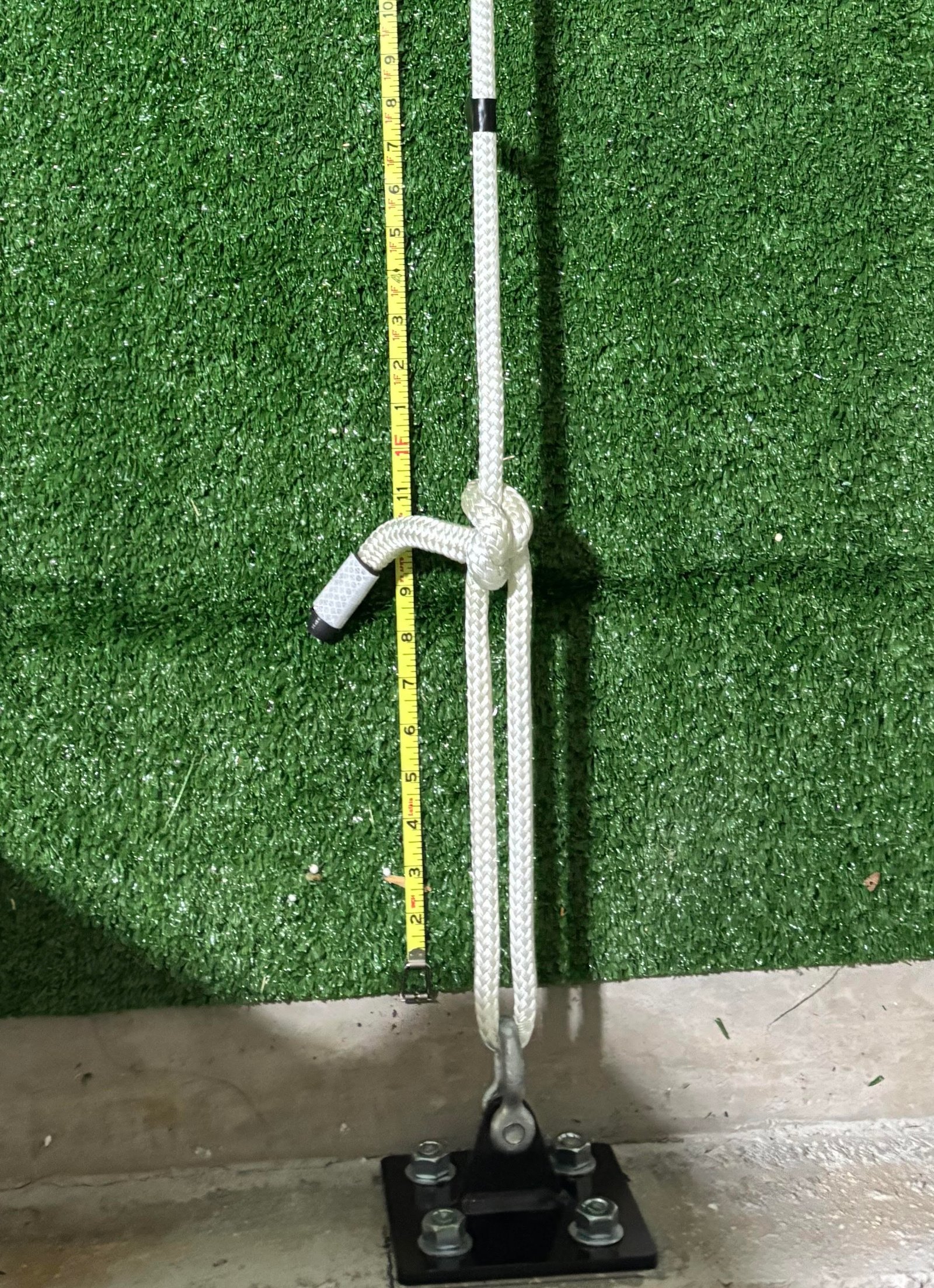
Comparative Static load testing of common tie-down knots and terminations to better understand strength reduction and system movement.
Static load testing for further evaluation of fish-scale deflection methods, practical preload targets, and tie-down rope working length.
Build-out and initial use of a peak-gust and dynamic-loading test rig to evaluate selected 1/2" rope families under more realistic transient loading conditions. Testing will compare dry and wet-after-dry performance, with a focus on dynamic load response, damping characteristics, elongation, assembly movement, permanent set, preload retention, and repeatability after multiple load events. The current Phase 2 educational shortlist is expected to include double braided polyester, 12-strand polyester, double braided nylon, static kernmantle, and 3-strand nylon.
Static load testing will expand beyond rope-only measurements to evaluate complete energy-management tie-down systems, including EPDM snubbers and ShockStrap-style straps. The planned program will measure static load response, elongation, lockout behavior, permanent set, and repeatability to better understand how these devices may help reduce shock loading and improve aircraft tie-down performance.
Lab Series
Phase 1 articles and videos will publish as a structured pilot-education series covering rope behavior, wet testing, movement, slack, and the transition to dynamic gust testing.
Static load rig walkthroughs, test demonstrations, and rope behavior explainers.
Short public summaries of testing programs, methods, and practical findings.
Downloadable summaries, charts, and field-focused tie-down research notes.
Technical Writing & Research
RampWarden Lab supports practical aviation writing, testing, and analysis related to tie-down ropes, knots, elongation, preload tension, wind loading, and ramp restraint systems.